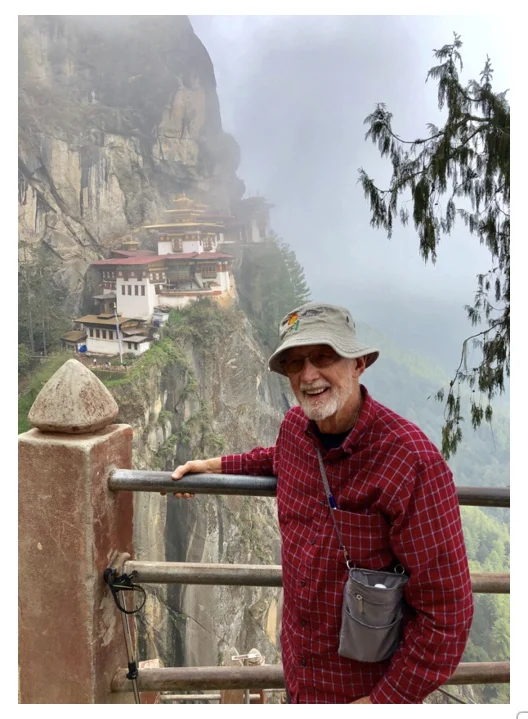
The concept of active aging involves commitment to maintain physical and mental well-being. This can be said to have been well-represented by the experience of an 84 year-old man who embarked on a journey to climb to the top of the highest Buddhist monastery in the world, Paro Taktsang. Also known as the Tiger’s Nest, it is a sacred Vajrayana Himalayan site. It clings to the side of a mountain in the Paro Mountain Range in the ancient country of Bhutan. The Tiger’s Nest was built in the ninth century as a meditation cave for Buddhist monks. It was officially designated as a monastery in 1692.
The climb to the top of the Tiger’s Nest is a demanding trek that proves to be a real test of physical stamina, endurance, and mental toughness. Committing to make such a climb might seem intimidating at an advanced age, but the following story of one man’s quest to make the climb offers proof of the benefits of staying active even in the later years of life. There’s only one way to reach that monastery at the top of the mountain and that is by hiking the rough dirt trail, immediately followed by climbing the more than 900 uneven stone steps until you reach the top which is 10,000 feet above sea level. The elevation gain is a physically challenging 667 meters. The distance of the hike is 6.4 kilometers and takes about three hours each way depending on your level of fitness.
For most of his life, the man maintained an active lifestyle by volunteering for various groups, as well as participating in aerobic and balance classes, and utilizing exercise equipment in the gym. His recreational activities and commitment to exercise, as well as regular massage sessions, helped him maintain flexibility and prepare him for the physical demands required to hike the trail and climb the stairs to reach the monastery at the top of the mountain. The mental aspects of active aging can be just as important as the physical. While making the ascent, the climber had to stay focused on breathing in order to cope with the stress of the high altitude. He had to continue to try hard to put one foot in front of the other in the thin air.
It soon became more and more difficult to maintain a steady pace and concentrate on the task at hand. But then, once he was standing in the bright sunlight in the door of the Tiger’s Nest Monastery, his mind became clear, (maybe for the first time) and he felt a great sense of accomplishment. That moment was a powerful reminder that age doesn’t have to limit your travels or your adventures. In fact, active aging is more than just extending your life. Remaining active also includes enhancing your quality of life as you age and encourages older adults to remain active and continue to pursue their various interests. This 84 year-old climber’s personal journey to reach the summit of the Tiger’s Nest in Bhutan could serve as an inspiration to all those who wish to maintain an active lifestyle in their later years.
Active aging looks different for everyone. For some, it’s walking the steps of an ancient trail to a monastery. For others, active aging could be gardening, swimming, a bike ride, a walk on a treadmill or a walk around the neighborhood. Your personal physical abilities and mental acuity, along with input from your personal physician, fitness instructors or other professionals can help determine what active aging can look like for you.
Robert Franks, the climber in this story, is also this writer. Now, at age 89, he is still trying to carry on an active aging lifestyle and… “Living To Move—Moving To Live.” As an ARC resident, our dedicated staff ensures the safety and well-being of his home while he is off on his adventures, providing peace of mind that allows him to explore the world without worry. Visit our website to learn more about how we take care of our residents!