At ninety, I’ve learned that the best souvenirs are stories—and Spain gave my wife, Dain, and me more than we can ever uncork. The excellent security at the Army Residence Community gave us the peace of mind we needed to be able to spend several weeks exploring Spain’s vast wine country, royal cities, and soulful south.
We always reserve our hotel room for a couple of days before the tour begins, staying in the same hotel as our group, which lets us ease into the journey. Those extra days give us time to shake off the jet lag, get used to the food and the currency, acclimate to the weather, absorb the rhythms of the local folkways, and browse the shops at a pace that feels more like wandering than hurrying.
La Rioja – Ribbons of Titanium and Vines
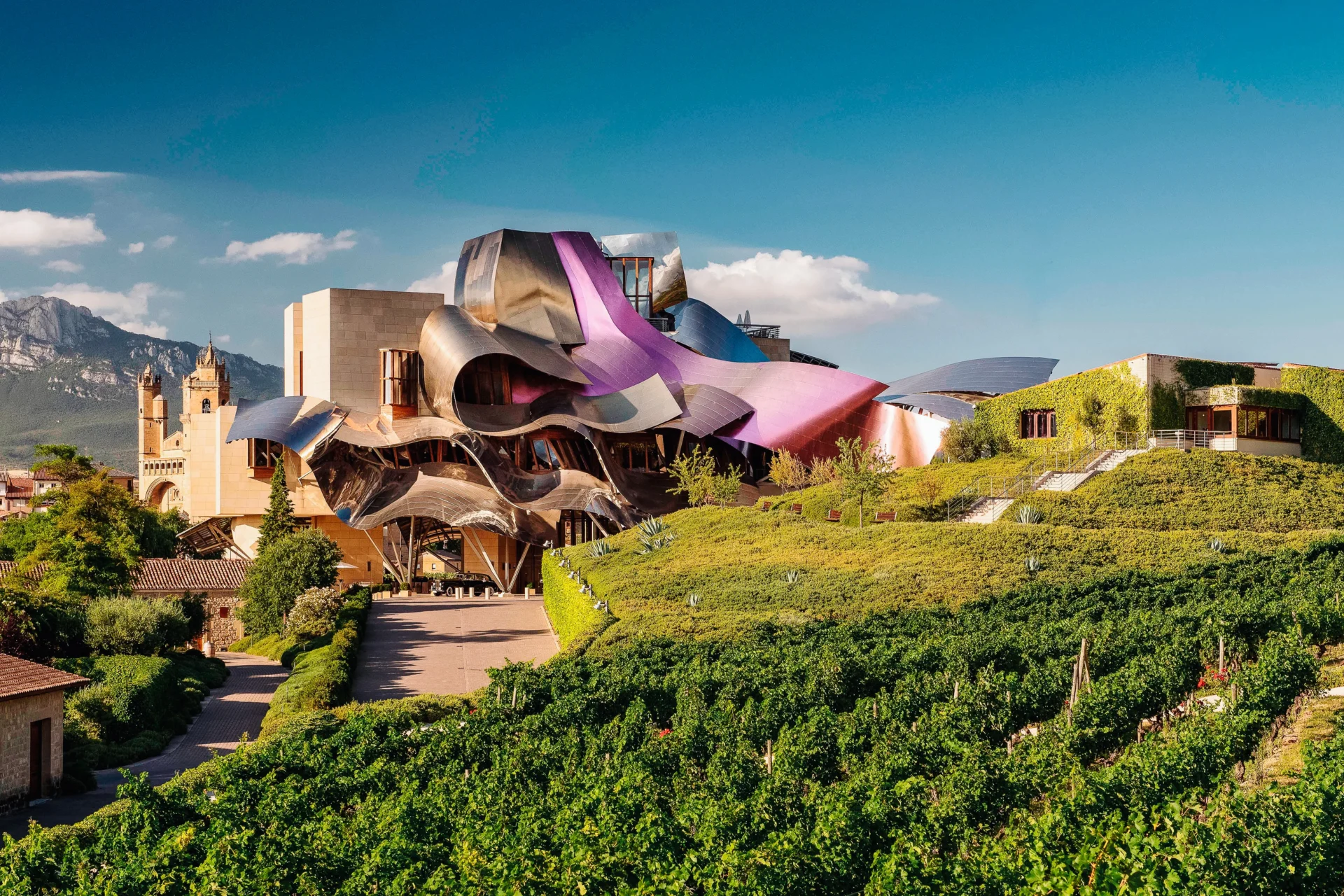
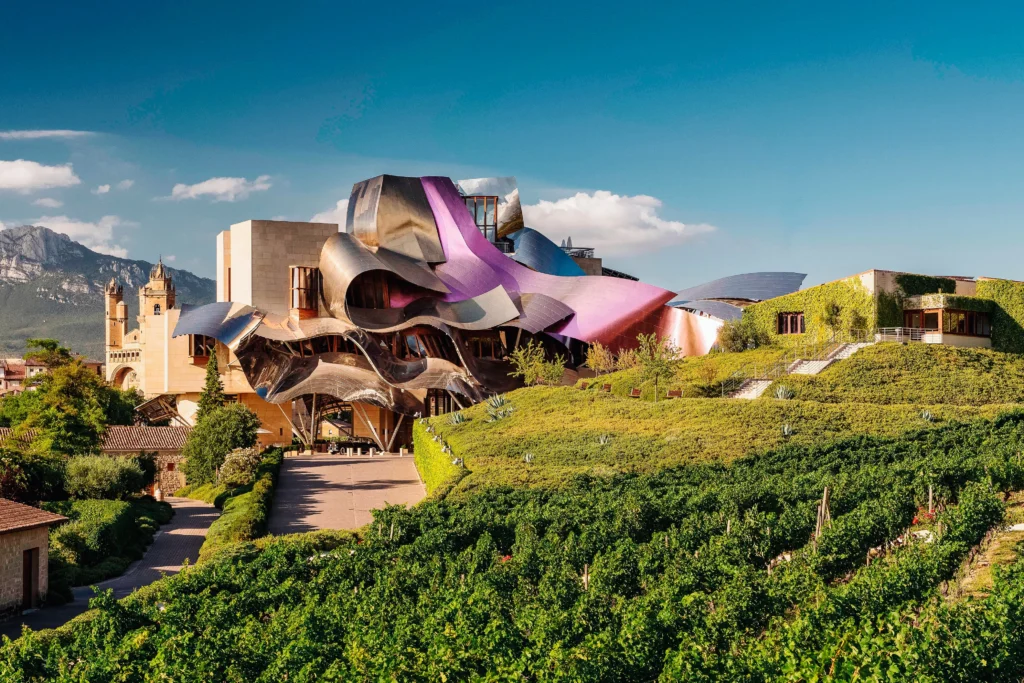
We began in La Rioja, Spain’s celebrated wine country, where the vineyards roll like green waves beneath wide skies. Our stay at the Hotel Marqués de Riscal, a Michelin-key property in Elciego, felt like we were stepping into a modern sculpture. The hotel’s titanium-clad pink, silver, and gold ribbons twist above the traditional vineyards—an exhilarating contrast of old and new. The hotel’s Michelin-star restaurant was so popular we couldn’t secure a reservation, but the view from our balcony paired perfectly with a glass of Rioja wine.
Nearby, we visited Valenciso Winery, a family-run bodega where the vintner’s wife served homemade lamb stew with white beans. The warmth of their hospitality was as memorable as the wine. One morning, we floated above the vines in a hot-air balloon, gazing down on the rippling roofs of the Ysios Winery—an architectural wave among endless rows of grapes.
Logroño and Laguardia – Tapas and Time Travel
In the capital of the Rioja region, Logroño, we joined locals on Calle Laurel, a lively street where tapas aren’t just food but a way of life. We saw young couples, families, and silver-haired friends like us, crowding the tiny bars. At Bar Soriano, we savored the famous Champiñones de Champions—plump mushrooms stacked and topped with a shrimp on warm bread. For a change of pace, we dined at Kiro Sushi, a ten-seat Michelin-starred Japanese sushi restaurant where two master chefs crafted each dish before our eyes. Their aged sushi, each piece a miniature sculpture, was served on plates styled with artistic precision.
A short drive took us back ten centuries to Laguardia, a walled hilltop town where pilgrims and soldiers once passed. Walking its stone streets, I could almost hear the echo of armored boots.
Madrid – Royals and Roast Suckling Pig
High-speed trains whisked us to Madrid, where we checked into the five-star Hotel Barceló Torre de Madrid, a sleek tower with sweeping city views. We wandered the grand Royal Palace, marveling at the gold-gilded throne room, and admired the Almudena Cathedral from a tapas bar terrace. Then we made our way to the Prado Museum, a must for any visitor, where we lingered over masterpieces by Velázquez, Goya, and El Greco.
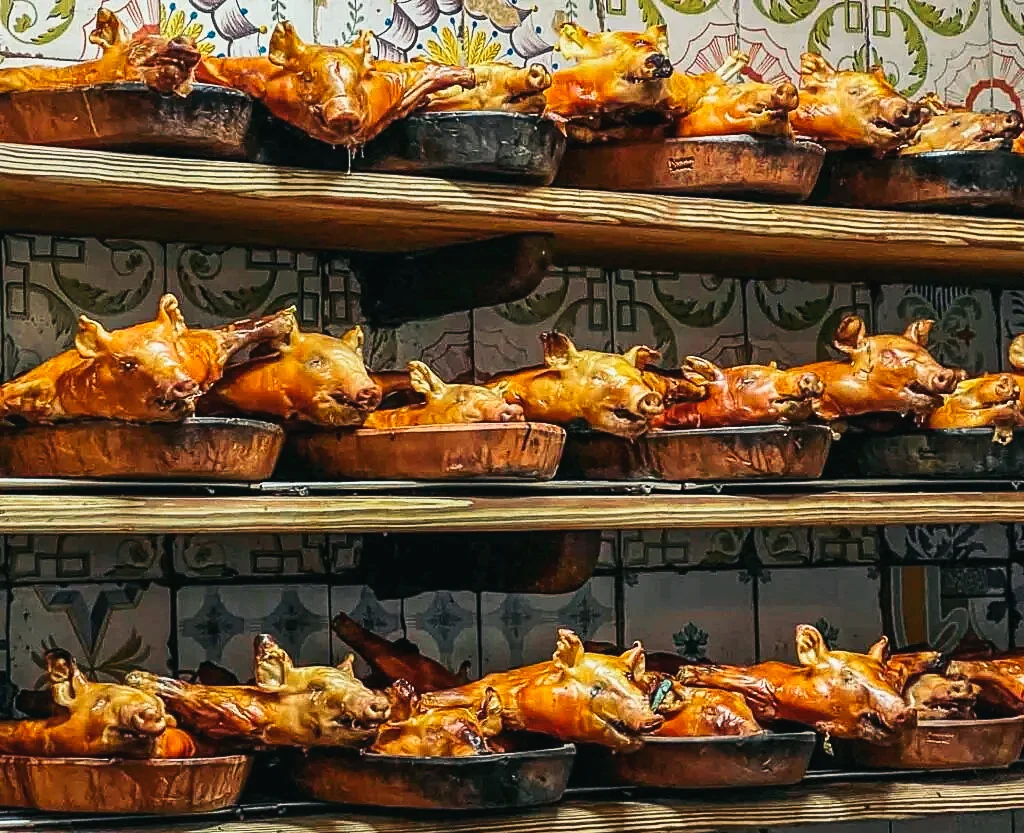
Meals in Madrid were unforgettable. Casa Botín (c. 1725), recognized by Guinness World Records as the world’s oldest restaurant, showcased racks of suckling pigs, and our own was carved right at the table, with its crisp skin crackling under the knife. The next day, we wandered through Madrid’s iconic San Miguel Market, one of Europe’s largest culinary halls, brimming with stalls offering artisanal treasures from every corner of Spain — cheeses from La Mancha, olives from Andalusia, and rich Iberian ham from Extremadura. Other popular options included empanadas with different fillings, tostadas with anchovies and bacalhau (cod), as well as more traditional Spanish dishes like omelets, tapas, fried cod fritters (buñuelos de bacalao), patatas bravas (Spanish fried potatoes), as well as raw produce and cured meats. We ended the night with paella, the national dish of Spain, at La Barraca, a beloved city landmark. A server there explained that their paella features Bomba rice, a dense, pearl-like grain that holds its shape in the fumet (broth).
Segovia – Stones of Empire
We made a day trip to Segovia, where the 2,000-year-old Roman aqueduct still carries water, its granite arches rising over 93 feet and standing defiantly against time. The fairy-tale silhouette of the Alcazar of Segovia, with its pointed turrets (said to have inspired Disney’s Cinderella castle) and the soaring Segovia Cathedral, Spain’s last great Gothic cathedral with its elegant spires –both UNESCO sites– crowned the city’s unforgettable skyline.
South to Seville –Sights, Scents and Sounds
A smooth ride on the train carried us to Seville, the capital of Andalusia. The Hotel Alfonso XIII greeted us with palatial grandeur—mosaic tiles, sweeping arches, and candlelit courtyards fit for royalty. That evening, we enjoyed a special feast inside the hotel’s historic gem, The San Fernando Restaurante, where the walls glowed with intricate tilework, and we were immersed in the soft murmur of the courtyard fountains.
The next day, a trip to Seville Cathedral, once a great mosque and now a UNESCO World Heritage site and the world’s largest Gothic structure, filled the air with the scent of oranges from its Patio de las Naranjas. The Giralda Tower, which once served as the mosque’s minaret and now as the Cathedral’s bell tower, holds 24 bronze bells—more than any other tower in Spain. Their deep, sometimes startling peals ring out across the city to mark feast days, services, and special occasions. Today, the bells are computer-programmed, a modern touch guiding centuries-old traditions that still echo over Seville’s rooftops.
On Easter Sunday, we joined locals at the Plaza de Toros de la Maestranza for the season-opening bullfight, a Holy Week ritual that brought together elite matadors from across continents to demonstrate their mastery in the ring. Our seats in the sombra—the shade—gave us a perfect view of the pageantry. Later, flamenco dancers stamped and twirled to guitar rhythms, their movements telling stories of love and loss with fiery precision.

From Seville, we took a day trip to Córdoba, where the Mezquita, another UNESCO treasure, dazzled us with red-and-white arches—Islamic artistry transformed into a cathedral after the Reconquista. We explored the Alcázar de los Reyes Cristianos, a former mosque turned castle, tribunal, prison, and now royal residence, where Napoleon once even set up a garrison. Lunch brought rich rabo de toro (oxtail stew) and clams in sherry sauce, both deeply Andalusian.
Jerez de la Frontera – Liquid Heritage and Living Tradition
Next came Jerez de la Frontera, cradle of sherry and flamenco. We toasted its “liquid heritage” in cozy tapas bars, tasting local sherries, wines, and brandies. At the Royal Andalusian School of Equestrian Art, Andalusian horses performed dressage on palace grounds—muscle and grace in perfect harmony.
Our final day of the tour included tastings at three more bodegas, including one where we sampled the world-famous Harveys Bristol Cream, a sherry once produced in England but now lovingly crafted here.
This journey gave us more than flavors and photographs; it offered a living lesson in history, culture, and the enduring art of hospitality. From the titanium ribbons of the Hotel Marques de Riscal to the gold of the Royal Palace throne room, Spain reminded us that life’s finest moments are meant to be savored slowly—much like a good glass of sherry.
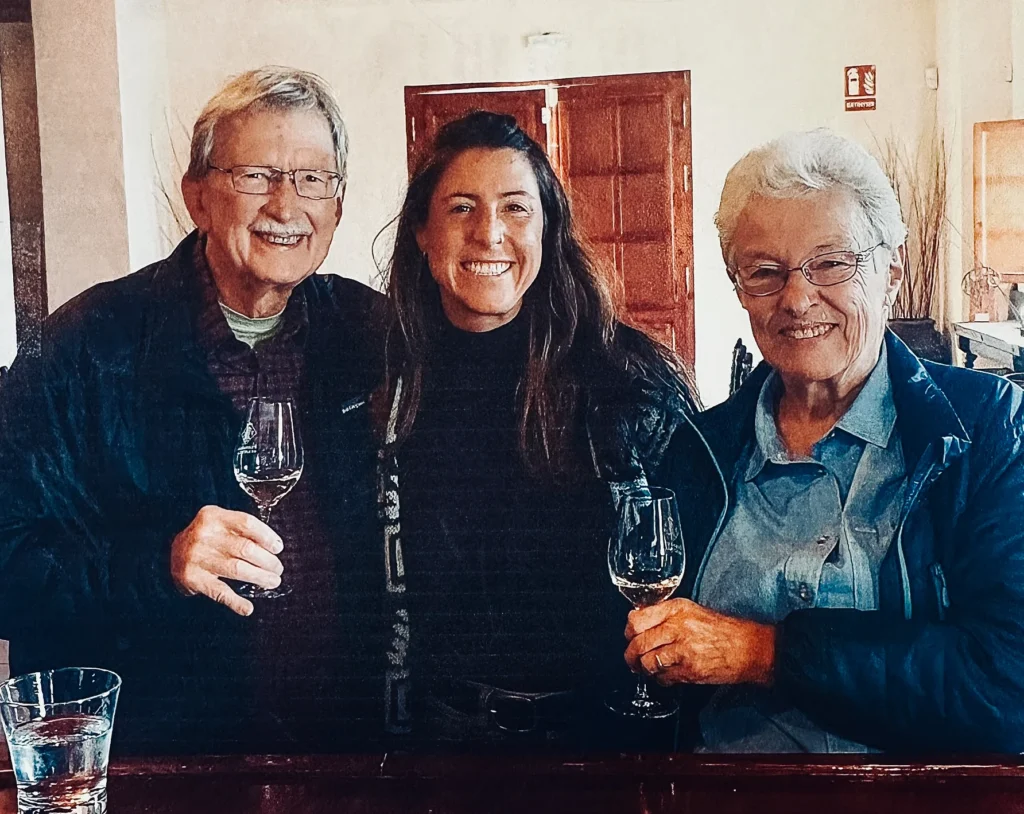
As Dain and I unpack our memories back at The Army Residence Community, we’re grateful that living here grants us the freedom to keep exploring the world together, one grand adventure at a time.
The traveler and writer of this story is Robert Franks, who, at age 90, still lives by the creed: “Move to Live—Live to Move.” He and his wife, Dain, are ARC residents committed to an active lifestyle. When they’re off on their adventures, our dedicated ARC staff is right here, ensuring their home is safe and sound. This allows them to explore the world without worry. Find out more about how we take care of our residents on our website.